

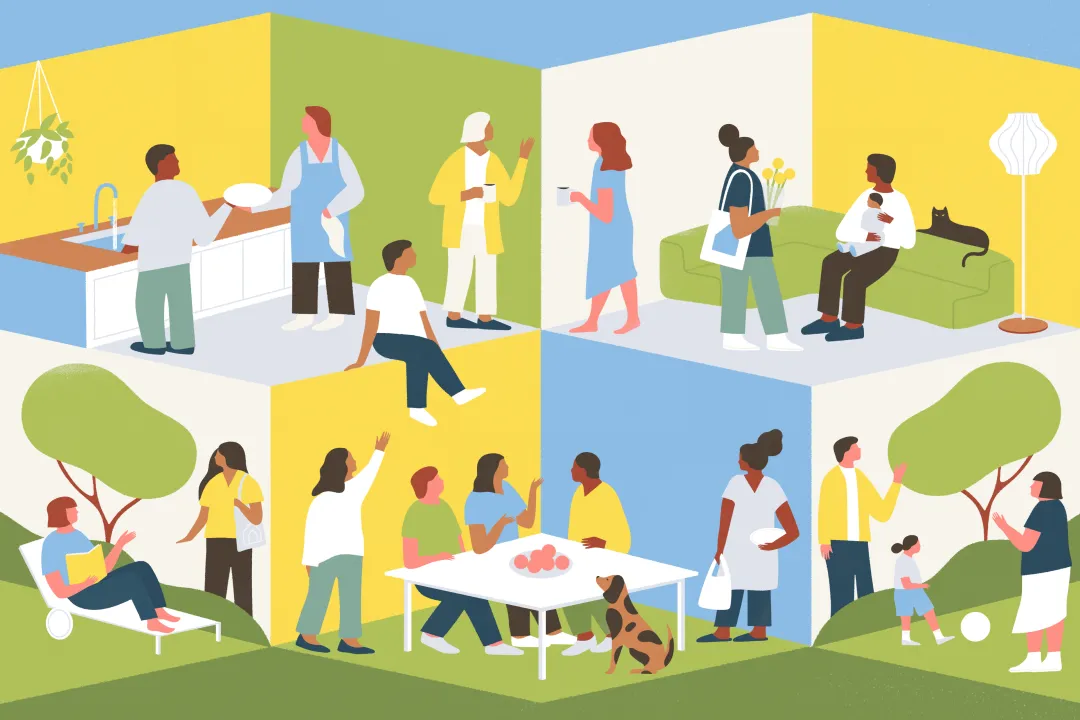
The topic of social isolation—and how profoundly harmful prolonged loneliness can be—has become especially prevalent over the past six years, following the COVID-era shutdowns. At the same time, conversations around homeownership have evolved, particularly here in the Bay Area. More people are now asking a deeper question: What if buying a home wasn’t just about square footage and finishes, but about building a supportive, social life?
As we’ve said many times, buying a home is one of the biggest life decisions most of us will ever make. We often focus on physical considerations: the structure, layout, number of bedrooms, or whether there’s a yard. Today, let’s shift the lens. Let’s talk about the social and communal qualities of where we live—and how those choices can shape the way we grow our lives.
This reality has helped drive renewed interest in social living and community buying.
Millennials and Gen Z buyers, in particular, are increasingly pooling resources—buying homes together or purchasing properties near one another. Financially, this strategy makes sense. But socially, it offers something even more powerful: an intentional way to combat isolation.
The Bay Area has already experienced a significant outflow of middle- and lower-income families who simply couldn’t afford to buy here. Thoughtfully designed communal living arrangements could help slow that exodus by allowing people to share the burden of homeownership instead of carrying it alone.
It’s easy to get stuck on that hamster wheel, especially because owning a home is often seen as a marker of personal success. But success shouldn’t come at the cost of connection, joy, or community.
When you co-buy:
In some cases, buying together can unlock better living. Instead of scraping by, you might collectively afford upgrades that elevate daily life—think rooftop gardens, shared workspaces, or even an in-ground pool.
This is why the idea of buying with friends—and thinking creatively outside traditional norms—is so compelling. When we consider major life stages we’ll all face someday—aging parents, illness, caregiving, or childcare—having built-in support under the same roof can be life-changing. The belief that you or you and your partner must handle everything alone is an incredibly heavy burden.
Outside of finances, there’s also the reality of how digital our lives have become. Online connections have their place, but an internet following won’t walk your dog when you’re stuck at work or bring you soup when you’re sick. Living with real people keeps us grounded in reality—seen, supported, and cared for in tangible ways.
There is freedom in knowing you have options. Freedom in choosing community. Freedom in deciding you don’t have to do life alone.
You are not alone.
As we’ve said many times, buying a home is one of the biggest life decisions most of us will ever make. We often focus on physical considerations: the structure, layout, number of bedrooms, or whether there’s a yard. Today, let’s shift the lens. Let’s talk about the social and communal qualities of where we live—and how those choices can shape the way we grow our lives.
The Reality of Bay Area Housing
With our region’s extremely high housing costs, simply getting your foot in the door can feel nearly impossible, especially for younger buyers. That intimidating price tag pushes many people away from the communities and social networks they’ve built over years. For Bay Area residents, buying often means relocating far from friends, family, and support systems.This reality has helped drive renewed interest in social living and community buying.
Millennials and Gen Z buyers, in particular, are increasingly pooling resources—buying homes together or purchasing properties near one another. Financially, this strategy makes sense. But socially, it offers something even more powerful: an intentional way to combat isolation.
The Bay Area has already experienced a significant outflow of middle- and lower-income families who simply couldn’t afford to buy here. Thoughtfully designed communal living arrangements could help slow that exodus by allowing people to share the burden of homeownership instead of carrying it alone.
The “House Poor” Problem
Another factor making shared homeownership appealing is the phenomenon known as being house poor. This happens when a person spends the majority of their time, money, and energy just to afford their mortgage. The result? Less freedom, fewer social experiences, and increased isolation.It’s easy to get stuck on that hamster wheel, especially because owning a home is often seen as a marker of personal success. But success shouldn’t come at the cost of connection, joy, or community.
So, What Can We Do?
For those interested in buying with communal living in mind, research is key. Zoning laws, HOA rules, and neighborhood culture all matter. Duplexes and multi-unit properties, in particular, can offer major advantages.When you co-buy:
- You can pool funds for a larger down payment
- You may collectively qualify for higher loan amounts
- You can split ongoing costs like maintenance, property management, and taxes
In some cases, buying together can unlock better living. Instead of scraping by, you might collectively afford upgrades that elevate daily life—think rooftop gardens, shared workspaces, or even an in-ground pool.
More Than Money: Real Human Connection
Financial stress is deeply tied to social isolation. Whether you’re stretched thin by a mortgage or shut out of homeownership entirely, that pressure can lead to shame, withdrawal, and loneliness.This is why the idea of buying with friends—and thinking creatively outside traditional norms—is so compelling. When we consider major life stages we’ll all face someday—aging parents, illness, caregiving, or childcare—having built-in support under the same roof can be life-changing. The belief that you or you and your partner must handle everything alone is an incredibly heavy burden.
Outside of finances, there’s also the reality of how digital our lives have become. Online connections have their place, but an internet following won’t walk your dog when you’re stuck at work or bring you soup when you’re sick. Living with real people keeps us grounded in reality—seen, supported, and cared for in tangible ways.
A Radical Idea That’s Actually Real
Buying a home with friends can sound like a childhood fantasy. But the more you read about it, talk to your realtor, and ask around, the more you’ll realize it’s a very real and growing path forward. For many, it’s not just practical—it’s transformative.There is freedom in knowing you have options. Freedom in choosing community. Freedom in deciding you don’t have to do life alone.
You are not alone.