
Published May 6, 2024
San Francisco apartment oddities explained.

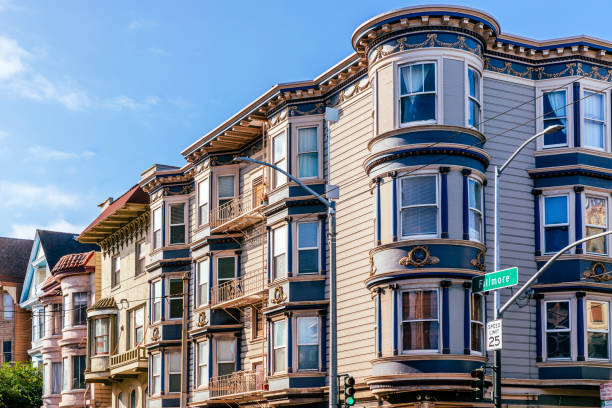
One of the many things that makes San Francisco charming and gives it its own special character is the architecture. Let’s look at some wacky features of the late 19th century to the early 20th century Edwardian Victorian homes, that leave people scratching their heads, what the heck is that for?
Have you ever been in a 2 to 3 story place and noticed a big ole lever at the top of the stairs? What’s the point of that sucker? We could call it, the lazy lever. Turns out it opens the front door, and its purpose is to get around walking your butt down the stairs to open the dang door. Before you could unlock your smart house through an app and see who’s on your porch with a video ring, they had built the lazy lever. Totally not actually called that, it’s just so befitting, let’s just make it a thing.
Let us enter the kitchen, shall we?
Many Victorians of that era have something built into the wall that looks.
Like a cross between a pantry and a cabinet. They were called a “pie safe”. That is not a dumb name that occurred in my head, it’s really historically called a pie safe, and we dig that. You ll notice there’s often a external vent in the back of the wall of the pantry, and rows of wooden shelves. The vents are covered by mesh to keep out bugs and birds and mice but it lets in the cool air. And that’s the key useful component of the pie safe. The general temperature in San Francisco is pretty crisp large parts of the year. The pie safe pantry keeps its contents cool naturally, even if you’ve got a fire going and your home is heated. The food products stay cool, and as a result keep longer.
Often in an unfamiliar Victorian, you will come upon a closet, and fling that door open, to find yourself shocked, befuddled , aghast, at a weird lonely toilet. Why is this toilet in the closet? What’s with the weird lonely dark toilet closet? Never fear friends, there is a reasonable explanation here. When homes of this time period were built, people were going potty in an outhouse or using chamber pots. Indoor plumbing hadn’t yet come into play. When the indoor toilet came about, Victorians were real uptight about hygiene. They thought it was gross to do a poo in the same room you shave and bathe. It was a lot of work to build another little private room to sit on the pot in, so it made a lot of sense to stick the toilet right in the closet. Boom. A strange, windowless, solitary stall.
In a similar vein, you will find a lot of these homes with a single stand alone sink in one of the bedrooms. This seems out of place but it’s the result of the same situation. The house was built before the dawn of indoor plumbing. The rando indoor sink was an addition all homeowners jumped at as soon as they could handle the cost. It meant not having to cart water in buckets every day, it meant more easily accessing cleanliness, it was awesome.
Moving to the exterior, there are a lot of houses in San Francisco that were built to appear as though they were bursting with grander, dripping with splendor, some serious look at me I’m rich swagger. If you haven’t noticed the plaster crests on a lot of San Francisco homes, especially in the marina and Richmond districts,
You will certainly notice them now. They are called Cartouches, and they exist as an outward expression of status, and are purely ornamental. It would be wrong to say none of them were personally relevant to the family of the specific homeowners. But most widely they were mass produced because they looked fancy. The Cartouche was just a crest that looked nice, not related to your own family crest over your front door. They’re popular on the buildings in the Marina and Richmond districts because those areas were heavily influenced by Spanish and Mediterranean architecture, and they dug those fancy decorative bad boys.
While we’re outside looking at the front of the house, how about those extremely steep sketchy driveways coming up abruptly from the garage under the house? Why would they do that? Or what’s with the tiny narrow weird garage built in front of the house, with no interior point of entry. That is stupid, you can’t get into your own garage from your own house without going outside.
Different weirdness, same kinda reasoning. There weren’t no automobiles driving around when that house was born. The house was built pre people getting around in cars, so the garage was another addition. Its execution was an afterthought, not planned into its original layout and that’s why it’s so dang weird. The steep driveways we’re built in front of homes where they dug down to add that basement. The little box in front of the house garages were built after the home, and if was built for tiny narrow cars, so good luck with your F350, that just ain’t happening.
When you find your self in an Edwardian Victorian in San Francisco, looking at some really wacky inexplicable feature, try thinking back to what times were like in that time period. No running water, no AC, no Wi-Fi. You might be able to come up with a viable use they could have designed the oddity for originally. Then you can whip out your smart phone and look it up, because that’s how we roll these days, endless access to information, and much bigger cars. It’s wild to think of how different it was back then, and how good we have it now. How much more we know, and how much nicer our bathrooms are.