
Published February 26, 2024
Is the future of CA real estate 3D printed?

It’s nearly springtime here in California, which means it’s almost summer, which means we will be bracing for another wildfire season. There’s all kinds of contradictory articles and speculation about whether a wet winter facilitates a less or more severe environment for wildfire danger. Some folks say the new growth from the rain will dry out quickly and become hazardous tinder underbrush. Others say the greenery and rain saturation will create a lusher, moister environment lasting through late summer months and lessening the parched hazards caused by drier winter weather.
Newly on the docket in the conversation about mitigating fire dangers to California homeowners is the conversation about 3D printed homes.
Let’s get into it.
Redding California was hit hard by wildfire in past years, and in July of 2023 in the very area where fires had torn through, the first 3D printed home was built in the state of Ca.
Because of earthquakes, and the massive damage to homes and buildings this state has suffered in the past, there are hella strict buildings codes. Taking that into consideration, it’s been a road to figuring out how to build 3D printed homes effectively and efficiently while being compliant and meeting state standards.
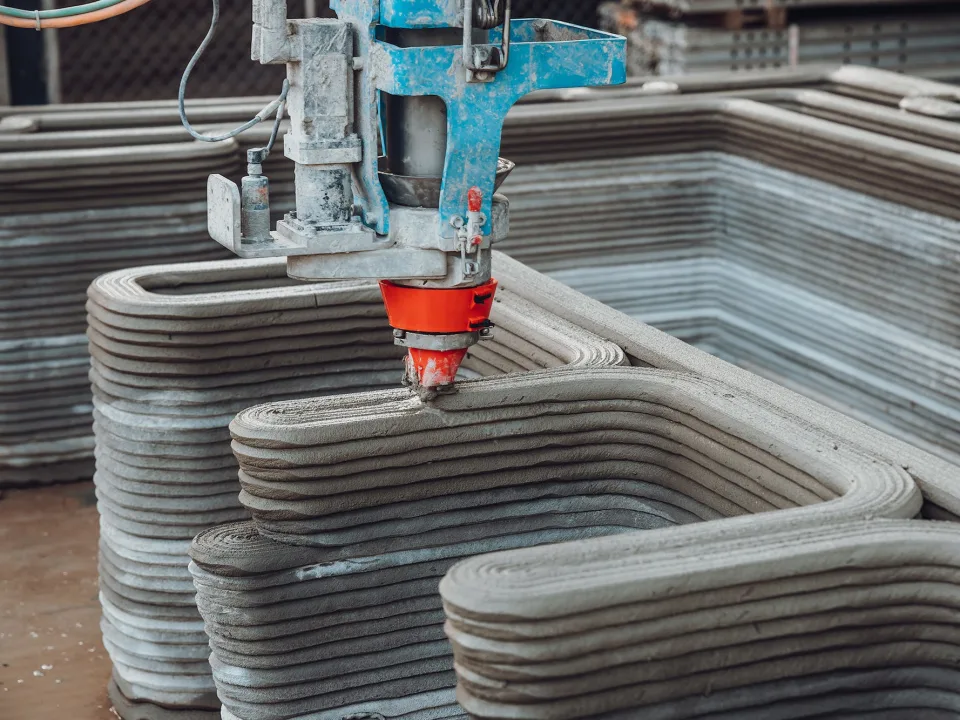
For folks who aren’t familiar, the reason 3D printed homes are fire resistant is the building materials. The majority of 3D printed buildings are created out of a concrete like material that’s a mixture of cement and sand or crushed stone or gravel.
A 3D printed home is a house fully constructed by 3D printing technology. The printer uses a blueprint to build the house in layers.
Because of the use of a machine vs skilled laborers and because of the difference in building materials, the overall cost of home production using this method is crazy cheap in comparison to what we’ve been accustomed to.
A recent article in the World Economic Forum sited a study showing that due to the different materials and the decrease in labor expenditure, it costs 45 % less to build a home with a 3D printer than to do so using traditional methods.
It’s important to note that plumbing, electrical and the installation of windows will still require expert trades people to be on the payroll in the process, but removing the necessity of people required to build the whole darn house is very significant.
The 3D printing process is designed with all the openings in walls and foundation for plumbing, electrical and windows already in place, so it’s streamlined for the other trades to do their thing.
Another sweet feature is the speed of the process, which is an estimated 20 times faster than traditional building time to create a house or commercial building.
Because the process is automated, the risk of human error is substantially reduced. 3D printing also eliminates the need for lots of additional reinforcement, because load bearing elements to construction are printed in the initial phase of building.
The last awesome aspect we’ll touch on here is environmental impact. 3D printing simply requires less material and energy during production. Because the construction process has less environmental impact, it’s a more sustainable option.
It’s wild to imagine these big printing machines all over the place busting out layered cement homes, when building homes with wood and metal is so engraved in us and how we think about building.
I like to think of it like Tesla, and how different it was to think of one big machine producing the entire body of a car, instead of the assembly line piecing it together. The machines sound expensive and that seems like a big leap, however here we are with Teslas all over the darn place. The machines are expensive, but as we explored the decrease in overall construction expense, maybe that looks like funds being re-appropriated towards the cost of funding more printing. It seems likely many more companies will emerge in this business in upcoming years.
There are already full housing divisions of 3D printed homes in Texas for example. But here in California, our ongoing struggles with wildfires make the prospect of fire-resistant buildings hit differently.
New technology can feel like upheaval in areas we’ve always understood in a particular way, but with time and the space to witness the process unfold successfully, we can shift our views to appreciate the new benefits.
Let me just put this out there, what might fire resistant building materials mean for the future prices of fire insurance? Hmmmm? Exciting stuff people, the future of California home production is bright. We’re here for it.